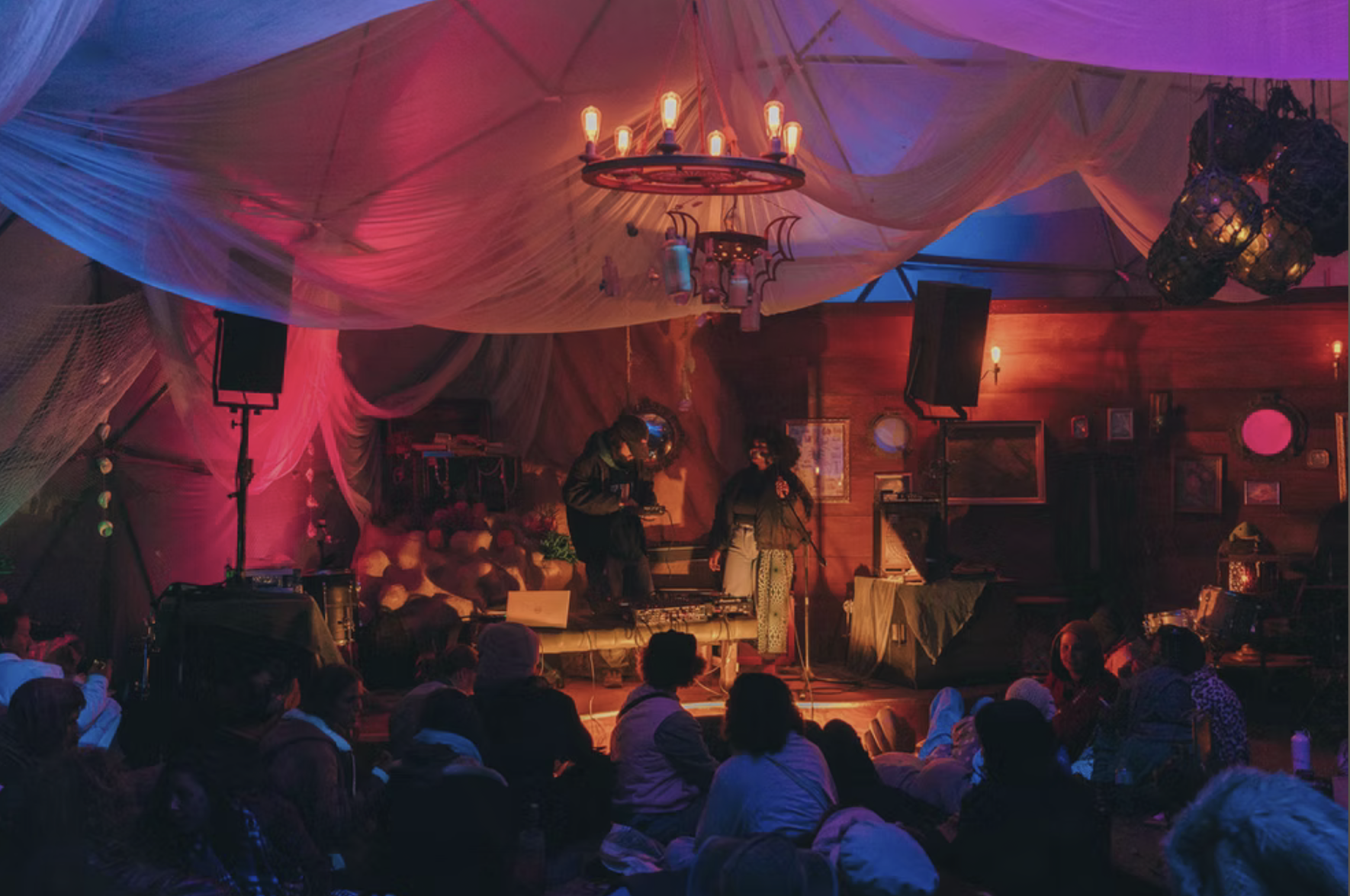
Pangea Festival Build, Soft Earth 2026. Source : https://www.tribeofpangea.com
Three Worlds. Three Invitations:
(1) “And on the first day, God said, ‘let there be light…’ And there was light upon the face of the earth.”
- Genesis 1:3
(2) “Once upon a time in a land just 2 hours outside of Cape Town, there existed a camp whose inhabitants were rugged and wild.”
- Modern Folk Tale
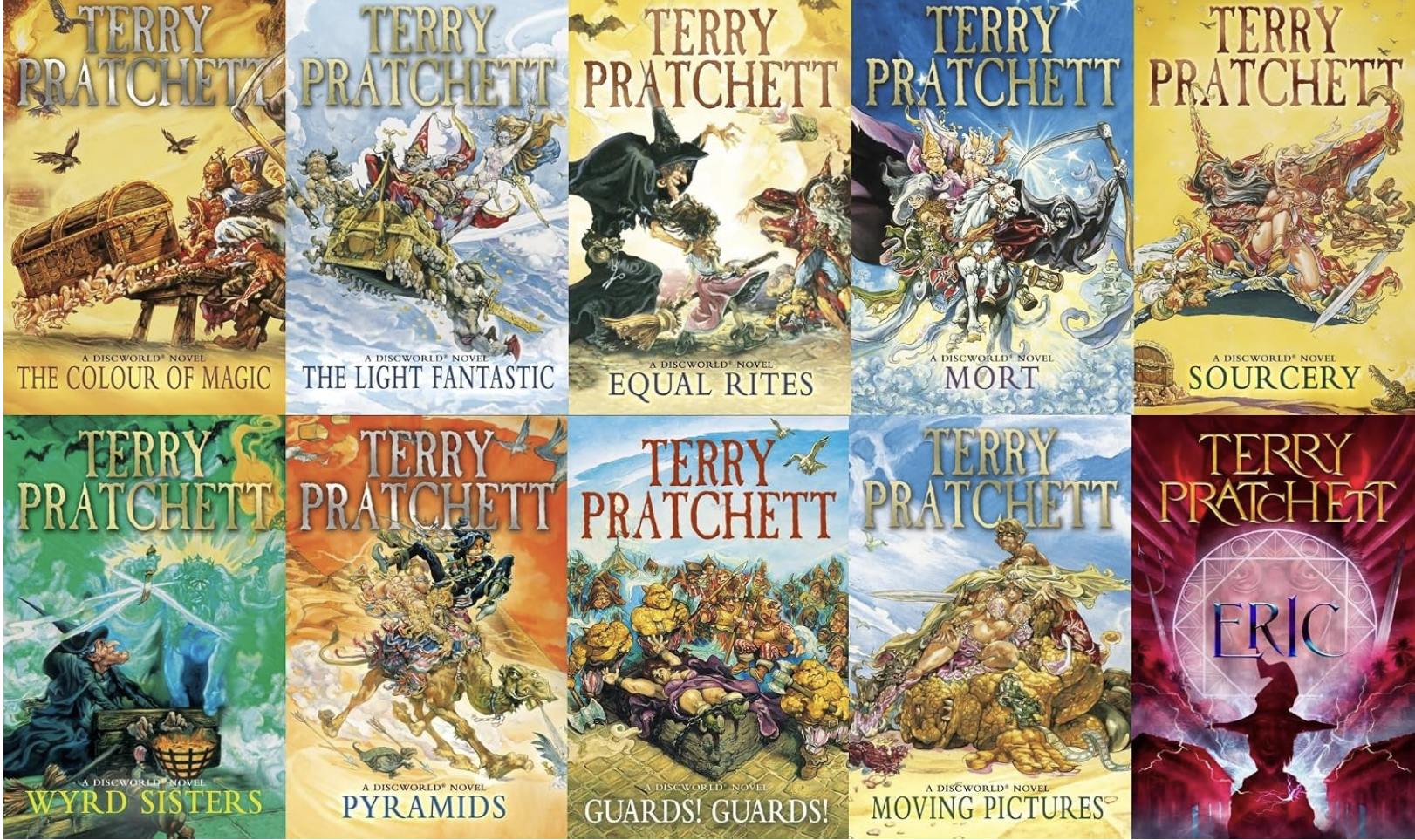
(3) “There is a curse. They say,
May you live in Interesting Times.
This is where the Gods play games with the lives of men, on a board which is at one and the same time a simple playing area and the whole world.
And Fate always wins… Most of the gods throw dice but Fate plays chess, and you don’t find out until too late that he’s been using two queens all along.”
- Terry Pratchett’s Creation of Discworld
Which invitation will you accept?
In our first world, a voice calls light into being. In our second, a camp outside Cape Town becomes the setting for a transposed traditional folktale. In the third, gods play games whose consequences unfold in the lives of those below.
Each introduces an idea of its own, along with instructions on how to live with—and survive—the consequences of that idea.
Our work as writers and storytellers is to create an experience that allows others to step into a reality different from their default. We produce not only words on a page but also make the decisions that shape that experience. Through these decisions, we invite readers or an audience to experience what it is like to be another person and perceive reality through their lens. In doing so, we create an opportunity to expand consciousness, awareness and empathy for others.
We then build a world that can contain this experience and invite people into it. They can enter in two ways: through their imagination or through their bodies.
Whether we are writing a book or creating a physical experience through an event, the components we initially consider are the same.
What is different is the medium. And the amount of material energy required to construct it.
Enter through the Imagination:
When we write a story or book, we are drawing information from an imaginary realm. The world of invention and possibility. Some say writers construct this realm themselves by connecting old ideas in new ways. Others imagine a collective well of consciousness that exists beyond the limitations of linear time. A well holding all of humanity’s memory. From this perspective, when we enter a flow state, we are tuning into a frequency that allows images and symbols to form in our mind’s eye. We become a conduit for this information. Jung’s idea of the “collective unconscious” offers another way of thinking about a shared source of images and symbols. When you dream, perhaps this is where you go too.
The speed at which ideas can move in the imaginary realm is extraordinary. They are not constrained by the limitations of material reality: bodily capacity, resources or the time it takes to communicate and coordinate with others. Here, the constraint is imagination itself. The mind’s capacity to conceive of what is possible. This is why it is so important that children and adults alike have opportunities to engage in activities that expand their imagination.
Once an idea has arrived, the next challenge is our capacity to work with it. Our bodily and emotional resources, alongside our technical ability, influence how we bring it into form. Writing an idea down and building it into a world or a full-length story requires attention, devotion and a sense of safety. I think of our nervous systems as a highway along which information travels from the imaginary realm, to be metabolised through our bodies and filtered through our minds.
We then draw on our technical knowledge of the language we are working within to give the idea a form that others can recognise. Along the way, painful experiences, fears and protective responses can interrupt the process. We may struggle to express something clearly. Or find ourselves pulling away from the work when what it brings up feels overwhelming.
In this metaphor, our bodies are like a floppy disc for the universe. We compress information from the expansive, multidimensional realm of imagination into words on a page. Those words become a manuscript. That manuscript becomes a book. The book travels through a distribution network and arrives in another person’s hands. As they read, the compressed information expands again into images, sensations and possibilities in their own imagination.
A whole world, unfolding in their mind’s eye.
An idea can take many story forms, but the medium we choose influences how much material energy it will require to take shape. Writing can be a first step. A manuscript becomes a proof of concept—a way of exploring the world and testing its internal logic before committing the resources needed to bring it into physical space.
The writing process can also bring us into contact with our own wounds, assumptions and blind spots. It gives us an opportunity to notice and work with them, and to question how they shape the world we are creating, before we take on the additional pressures of material constraints.
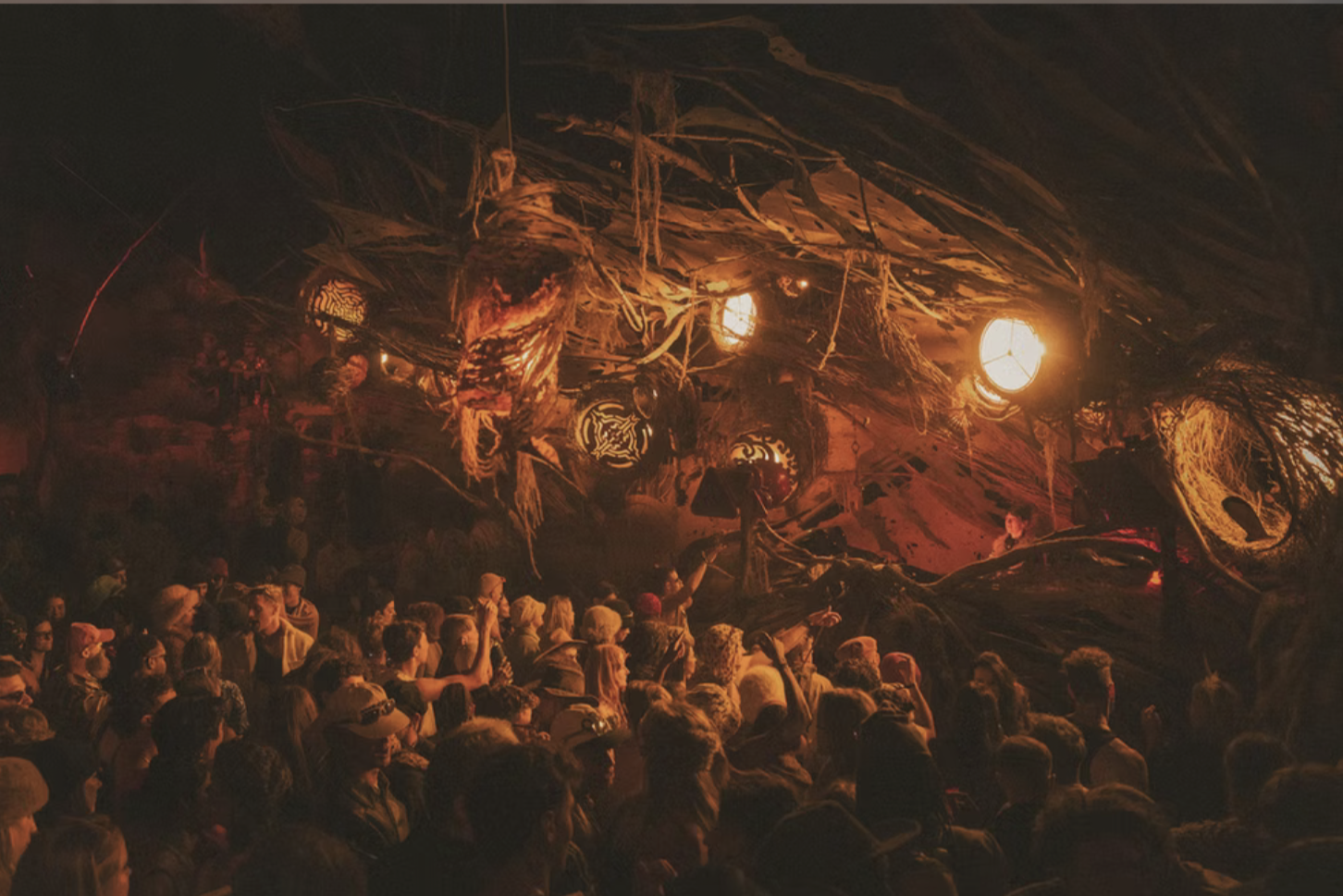
Pangea Festival Build, Soft Earth 2026. Source : https://www.tribeofpangea.com
Enter through the Body:
All stories, however, must eventually transcend the page. Nobody begins writing or reading a book without at least the unconscious belief or expectation that something will have changed through their having written or read it.
Imagine a person bent over in front of you, saying, “Hey, you’ve stepped on my finger. Please remove your foot.” In return, you stand there, making no effort to move it.
Eventually, their finger begins to swell, and they cry out in pain. “You’re hurting me. Please move your foot.”
You’re looking straight at them. Hearing their words. Seeing their body language. And somehow, the information is not reaching you. Some part of you is disconnected. You appear to be receiving the information, but there is no change in your behaviour in response to it.
Eventually, the person is writhing in pain. Unable to move your foot themselves, they become overwhelmed by the pain and their own lack of agency. They begin to shut down. The foot belongs to you. And you are the one who needs to move it. They cannot make that decision for you. Unable to stop or prevent the pain, they may begin to disconnect from the part of themselves that feels it.
This analogy offers a way of understanding what happens when we constantly absorb information passively and never do anything with it. For the person trying to communicate—whether a writer addressing a reader or a performer addressing an audience—it can be incredibly frustrating to keep creating and communicating, yet never see any change in response to what you’ve shared.
Working with the mind, the intellect and the imagination is often not enough to heal the disconnect between people and the effects of their actions. Just as a writer’s wounds can interrupt their ability to move an idea through the body and into expression, we might think of shared histories of pain as collective nervous system wounds: patterns that affect society’s ability to see itself clearly and adapt in the interests of the collective.
To begin healing that disconnect, it may be necessary to move beyond understanding a wound intellectually and come into felt contact with what it means. Equally, to access the medicine or resolution, a person may need an opportunity to experience an alternative to the outcome they have learned to expect. Something alive enough to reach the places in them that have become numb or disconnected.
This is where writing can expand into storytelling through the creation of a world that people can physically enter. A world that heightens a sensation, gives an idea a felt form and reveals the consequences of a choice. Through that experience, it can expose the flaw in a philosophy, make visible the roots of an ideology or open up possibilities for a completely different imagining of how a world could look, feel and be experienced.
Whichever the route, the reader or audience must feel the story. Experience it with their full physical self.
If we wish to inspire change.
Prompts to Help You Begin Creating
What kind of world would you like to invite a reader into?
Explore its landscapes, histories, relationships and rules through a guided world-building exercise in our Tuesday Session tutorial.
Join Our Next 8-Week Creative Writing Discovery Course
Our 8-Week Creative Writing Discovery Course guides you through the creative cycle—from the first spark of an idea to giving it a form you can share through performance or publication. Your idea might become poetry or prose, fiction or non-fiction.
Working through both the imagination and the body, we explore where you feel stuck in the process of creating. Through practical exercises and supportive feedback, we create opportunities to experience those moments differently—to feel heard when sharing something uncertain, supported when experimenting and encouraged to keep going. These experiences can offer a new point of reference for your creative practice, helping you build trust in yourself and your ability to bring an idea to life.
See our 2027 calendar and class schedule here.
Classes take place in person in Cape Town and online.
Email tanika@hatuakali-storytelling.org to book.
