8 Week Creative Writing Course [Idea to Publish]
This course guides you through the full life cycle of a creative writing project, from conceptual idea to material work—brought to life, shaped, and ready for showcase or publication.
-
-
All About Writing
A history of writing and the evolution of the craft. In this lesson, we will select a story and establish a series of strategies to help you stay committed to writing it.
A history of writing and the evolution of the craft. In this lesson, we will select a story and establish a series of strategies to help you stay committed to writing it.
-
-
-
Literary Forms, Arcs, Elements and Heroes.
In this lesson, we’ll focus on designing the narrative arc of your story, exploring how its structure and progression will unfold. You’ll learn how to weave key story elements—such as setting, character, conflict, and theme—into your work.
We’ll also define the hero of your story, the central figure who drives the narrative forward and whose journey forms the emotional core of your work.
In this lesson, we’ll focus on designing the narrative arc of your story, exploring how its structure and progression will unfold. You’ll learn how to weave key story elements—such as setting, character, conflict, and theme—into your work.
We’ll also define the hero of your story, the central figure who drives the narrative forward and whose journey forms the emotional core of your work.
-
-
-
The Nature of Truth
In this lesson, we’ll engage in a philosophical exploration of the nuanced distinctions between subjective vs. objective truth and factual vs. emotive truth. The goal is to understand what makes a story feel authentic and resonate as true with readers.
In this lesson, we’ll engage in a philosophical exploration of the nuanced distinctions between subjective vs. objective truth and factual vs. emotive truth. The goal is to understand what makes a story feel authentic and resonate as true with readers.
-
-
-
How to Ask Good Questions.
Lesson four focuses on the study of applied research and how to conduct effective immersion, interviews, synthesis, and analysis of information. You’ll learn how to gather details that help you create believable characters, place them in relatable environments, and accurately portray time periods—skills that are invaluable even when writing fiction. This research-driven approach will give life to your stories.
Lesson four focuses on the study of applied research and how to conduct effective immersion, interviews, synthesis, and analysis of information. You’ll learn how to gather details that help you create believable characters, place them in relatable environments, and accurately portray time periods—skills that are invaluable even when writing fiction. This research-driven approach will give life to your stories.
-
-
-
Foundations of practice to prevent or resolve Writer’s Block.
In this lesson, we’ll explore the root causes of writer’s block and how to set yourself up to avoid common pitfalls or heal the underlying issues that may trigger it. Lesson five combines foundational techniques, therapeutic approaches, and somatic journaling exercises to help you overcome creative barriers and maintain a steady writing practice.
In this lesson, we’ll explore the root causes of writer’s block and how to set yourself up to avoid common pitfalls or heal the underlying issues that may trigger it. Lesson five combines foundational techniques, therapeutic approaches, and somatic journaling exercises to help you overcome creative barriers and maintain a steady writing practice.
-
-
-
Rejection Therapy
The great paradox of writing: technically great art comes from writing for yourself. However, we must also accept that what feels personal, meaningful, or true to us may not always resonate with others in the way we hope. Lesson seven introduces the essentials of rejection therapy, offering tools to navigate feedback, refine your work through editing, and develop empathy for your audience.
The great paradox of writing: technically great art comes from writing for yourself. However, we must also accept that what feels personal, meaningful, or true to us may not always resonate with others in the way we hope. Lesson seven introduces the essentials of rejection therapy, offering tools to navigate feedback, refine your work through editing, and develop empathy for your audience.
-
-
-
Publication Routes: Systems Thinking for Emerging Writers.
You’ve made it this far—through the ups and downs, rigorous labor, sacrifices, blocks, therapies, and countless hours spent with your craft. Now, your story is ready to go. But where does it go from here? How do you reach your intended audience, and can you make a living from this grueling work? Lesson six is a deep dive into the local and international landscape of publishing and distribution, equipping you with the knowledge to navigate the world of storytelling beyond the page.
You’ve made it this far—through the ups and downs, rigorous labor, sacrifices, blocks, therapies, and countless hours spent with your craft. Now, your story is ready to go. But where does it go from here? How do you reach your intended audience, and can you make a living from this grueling work? Lesson six is a deep dive into the local and international landscape of publishing and distribution, equipping you with the knowledge to navigate the world of storytelling beyond the page.
-
-
-
How to Begin Again: Embracing Endings to Make Space for Creative Evolution.
Where does a story begin, and when does it end? The true benefits of writing lie not in the final product, but in the process—the repeated practice, the letting go, and the surrendering of your work. In this lesson, we’ll reflect on our journey, learn from the process, and set intentions for the next cycle. And then, we begin again, making room for new stories to emerge.
Where does a story begin, and when does it end? The true benefits of writing lie not in the final product, but in the process—the repeated practice, the letting go, and the surrendering of your work. In this lesson, we’ll reflect on our journey, learn from the process, and set intentions for the next cycle. And then, we begin again, making room for new stories to emerge.
-
Our Team
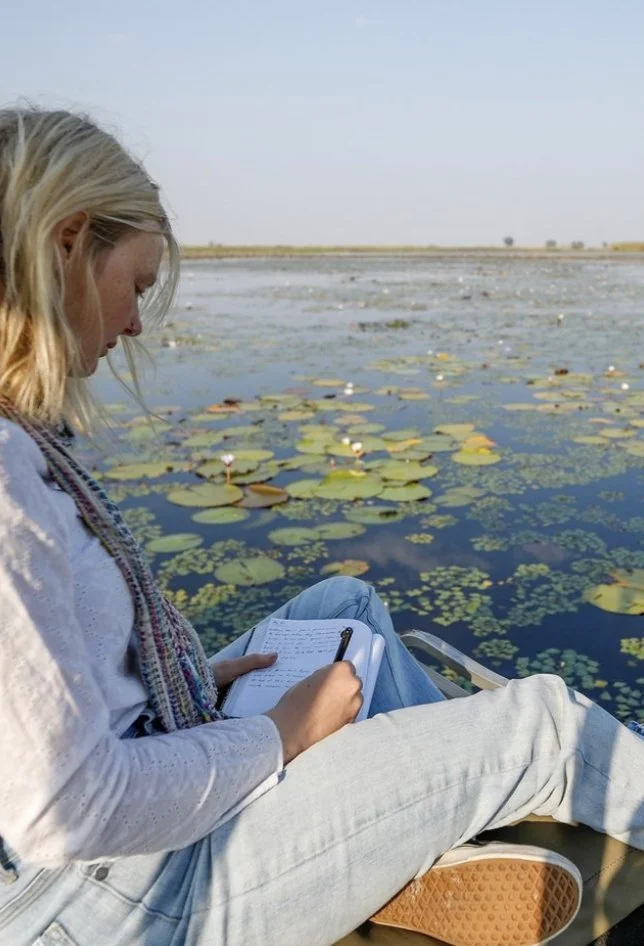
Tanika Paschke-Moloi
Tanika Paschke-Moloi is a writer and multi-disciplinary artist with a background in creative writing, journalism, and social entrepreneurship. She has worked as a storyteller across Sub-Saharan Africa and the UK, collaborating with social impact organisations and design agencies. As founder and facilitator, she creates spaces for writers to deepen their craft, connect in community, and explore what it means to be human through story.
Founder and Facilitator
Robyn Sylvester
Robyn Sylvester is a community and events lead focused on creating thoughtful, well-held spaces for connection and exchange. She brings experience in organising and facilitating gatherings that are both structured and welcoming, and is the go-to person for admin, ensuring everything runs smoothly behind the scenes. At Creative Writing in Cape Town, she keeps the community engaged, supported, and connected.
Community and Event Lead
Programme Assistant and Content CreatorChloe Smit
Chloe Smit is a program assistant and content creator at Creative Writing in Cape Town. She started as a student, fell in love with the course, and soon couldn’t resist joining the team. Now she helps keep programs running smoothly while bringing the community’s stories to life through creative content and playful engagement.
FAQs
-
It all begins with an idea. Maybe you want to launch a business. Maybe you want to turn a hobby into something more. Or maybe you have a creative project to share with the world. Whatever it is, the way you tell your story online can make all the difference.
-
It all begins with an idea. Maybe you want to launch a business. Maybe you want to turn a hobby into something more. Or maybe you have a creative project to share with the world. Whatever it is, the way you tell your story online can make all the difference.
-
It all begins with an idea. Maybe you want to launch a business. Maybe you want to turn a hobby into something more. Or maybe you have a creative project to share with the world. Whatever it is, the way you tell your story online can make all the difference.
-
It all begins with an idea. Maybe you want to launch a business. Maybe you want to turn a hobby into something more. Or maybe you have a creative project to share with the world. Whatever it is, the way you tell your story online can make all the difference.